
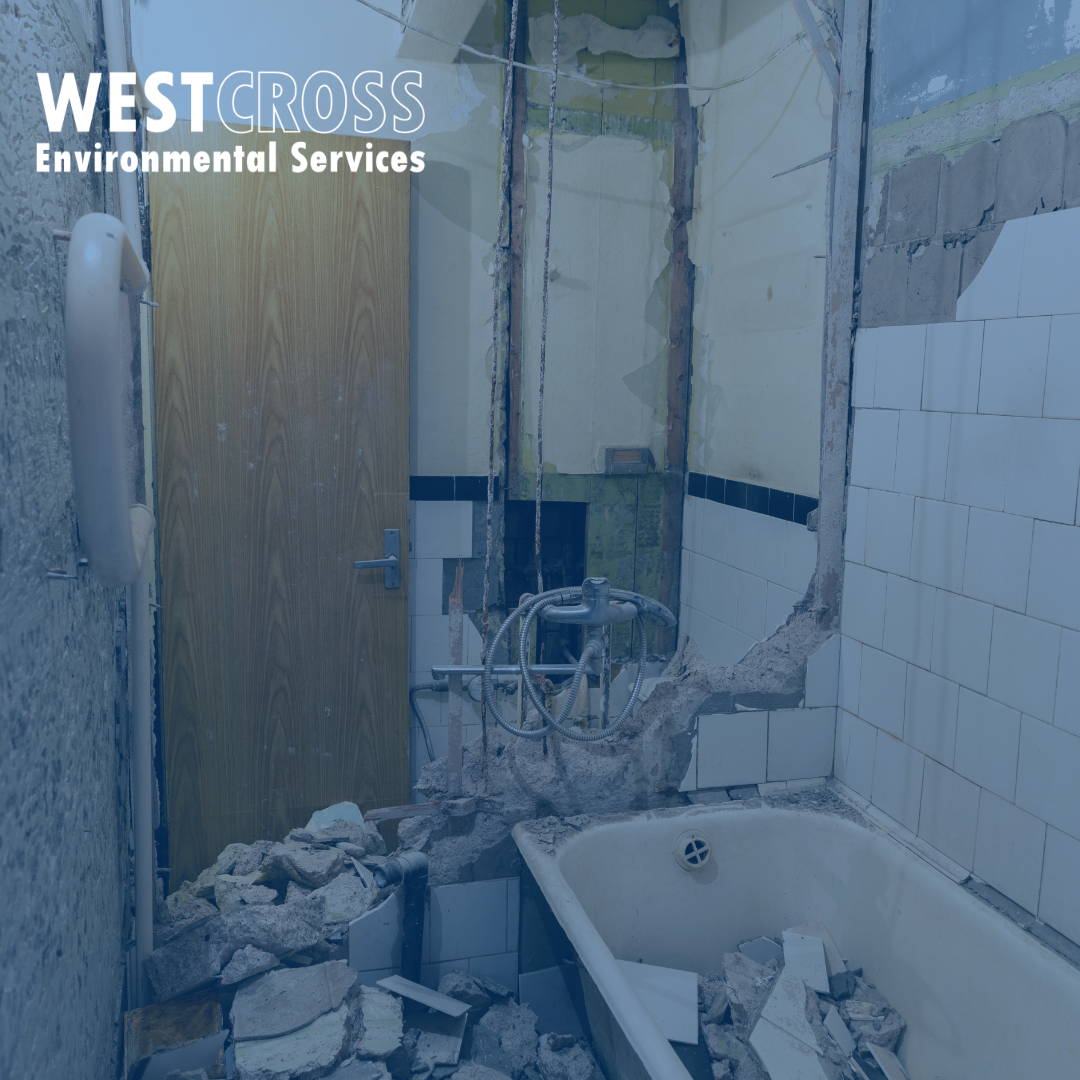
When you think of dangerous places in your home, the bathroom probably doesn’t spring to mind. But if your property was built before 2000, that freshly tiled wall or cosy boxed-in pipework might be hiding something far more sinister — asbestos.
At WestCross Environmental Services, we’ve uncovered asbestos-containing materials (ACMs) in more bathrooms than we care to count. From innocent-looking wall panels to dusty old pipe lagging, these hidden hazards can turn a simple renovation into a serious health risk.
So how do you know what to look for? Let’s break it down.
Where Asbestos Might Be Hiding in Your Bathroom
1. Wall & Ceiling Panels
Many older bathrooms used asbestos cement sheeting or composite board behind tiles or as splashbacks — especially in council housing or prefab builds.
⚠️ Tell-tale sign: Flat, hard panels that pre-date 2000, often painted over or tiled.
2. Boxed-In Pipework
To tidy up heating and water pipes, builders often encased them using asbestos insulating board (AIB) or cement board — highly dangerous if drilled or removed.
⚠️ Watch for: Old painted or discoloured boxing, especially in cupboards or under sinks.
3. Pipe Lagging
In older homes, asbestos was used to insulate hot water pipes, especially near boilers or tanks. This “fluffy” lagging can crumble easily, releasing deadly fibres.
⚠️ Clue: Thick, grey-white insulation, often fraying or damaged in older lofts, cupboards, or airing cabinets.
4. Underfloor Tiles or Adhesives
Many bathrooms had asbestos vinyl floor tiles or black bitumen adhesive beneath lino or newer floors — often hidden under years of upgrades.
⚠️ What to check: If you’re ripping up old flooring, assume the adhesive or tiles could contain asbestos.
How Dangerous Is It?
Very. Disturbing ACMs during a renovation — by cutting, drilling, sawing, or even sanding — can release microscopic asbestos fibres into the air.
And once inhaled, those fibres don’t break down. They lodge in your lungs and can cause mesothelioma, asbestosis, or lung cancer, sometimes decades later.
💡 Did you know? A single disturbed AIB board can release millions of fibres in minutes.
What Should You Do if You Suspect Asbestos?
- Don’t touch or disturb it
- Call WestCross for sampling or a survey
- Don’t vacuum or sweep debris — it spreads fibres
- Get a professional removal — especially before bathroom refurbishments
FAQs – Bathroom Asbestos & Pipe Lagging
1. Is asbestos common in UK bathrooms?
Yes — especially in homes built before 2000. It was frequently used in wall panels, pipe lagging, floor tiles, and backing boards.
2. How can I tell if my bathroom panels contain asbestos?
Visually, you can’t — it looks like ordinary board. Testing and lab analysis are the only safe way to confirm asbestos.
3. Can I remove asbestos panels or pipe lagging myself?
No. These materials are often classified as licensed and must be removed by qualified professionals under strict safety conditions.
4. Is asbestos in pipe lagging still dangerous if it’s not damaged?
Yes. Even undamaged asbestos can pose a risk if disturbed. Deterioration, vibrations, or accidental impact can release fibres.
5. What’s the cost of bathroom asbestos removal?
Costs vary depending on the material and extent of work, but we provide clear quotes after assessment. It’s far cheaper than the cost of contamination — or health risks.
Call Us Today
If you’re planning a bathroom renovation — or suspect asbestos in your walls, pipes, or floors — don’t take the risk. Let WestCross assess, test, and safely remove asbestos to keep your family, tenants, or clients protected.
📞 0330 043 9222
📧 info@westcross-es.co.uk